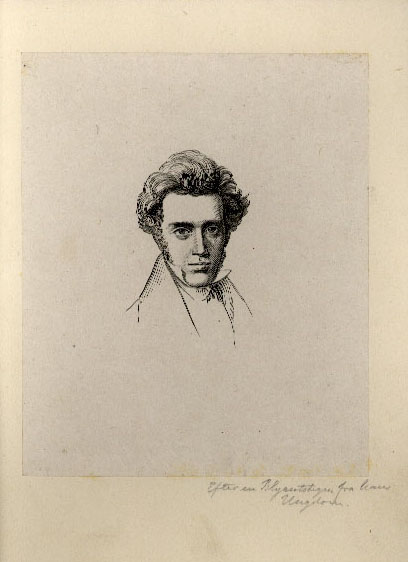
Kierkegaard’s Christian Existentialism is fundamentally concerned with the paradox of faith. Faith, in his view, is not a simple act of belief, or assent to rational doctrines but an embracing of contradictions and paradoxes that cannot be understood through reason alone. In Fear and Trembling, Abraham’s willingness to sacrifice Isaac represents the ultimate paradox of faith: it is the belief in God’s promise despite the apparent contradiction in God’s command. Abraham believes in the possibility of Isaac’s survival, even though he is asked to kill him. This paradoxical stance – where reason and morality seem to break down – is for Kierkegaard, the essence of authentic faith. The religious individual must be prepared to confront the absurd and be willing to trust in God’s will, even when it defies human logic.
Kierkegaard’s notion of faith is not merely a passive belief but an active, transformative experience. The individual must struggle with doubt, anxiety, and fear – but ultimately move forward in faith, accepting the absurdity of the divine command. Their struggle is what gives faith depth, and authenticity. It is not faith if it is easy or reasonable. True faith arises in the face of impossibility and despair.
For Kierkegaard, Abraham’s leap of faith lies in his willingness to trust in God’s goodness and promises despite apparent absurdity and ethical violation of the command. This tension between ethical duty and religious obedience creates the central dilemma of the work. Abraham’s faith is not based on reason or understanding but is an existential decision to trust in the paradox of God’s will.
In Fear and Trembling, Kierkegaard explores Abraham’s willingness to sacrifice Isaac as a demonstration of faith that transcends the ethical. Abraham is faced with a divine command that violates the most basic of moral laws – killing his son – but instead of questioning a rebelling against the command, Abraham obeys with full trust in God. In this act, Abraham exhibits what Kierkegaard calls the teleological suspension of the ethical. Kierkegaard suspends the ethical imperative in order to fulfill God’s command, because he believes in the divine promise that his descendants will come from Isaac. Abraham resigns himself to the loss of Isaac. He accepts that from a human perspective, Isaac is as good as dead before the sacrifice is made. He surrenders himself, his attachment to the world in this act of resignation.
At the same time, Abraham’s faith in God’s plan and promise allows him to believe that, even if he sacrifices Isaac, God will somehow fulfill his promise that Isaac will be the father of many nations – as the son of Abraham. This is the paradox. Abraham believes that even in the apparent destruction of the promise, the promise will be fulfilled. This belief is an absurdity from the standpoint of human reason. Abraham’s act is not merely a heroic act of moral courage; it is paradoxical and deeply troubling. It illustrates tension between the finite and the infinite, the ethical and the religious. For Kierkegaard, Abraham is the ultimate example of a knight of faith: he is the one who embodies the deepest paradox of human existence – living in a world with the understanding that his relationship with God transcends reason, ethics, and even life itself.
His act of being willing to sacrifice Isaac demonstrates the tension between faith and ethics, and the possibility of living in absolute trust in God despite the absurdity of the situation of Genesis 22.
 colemorganwrites