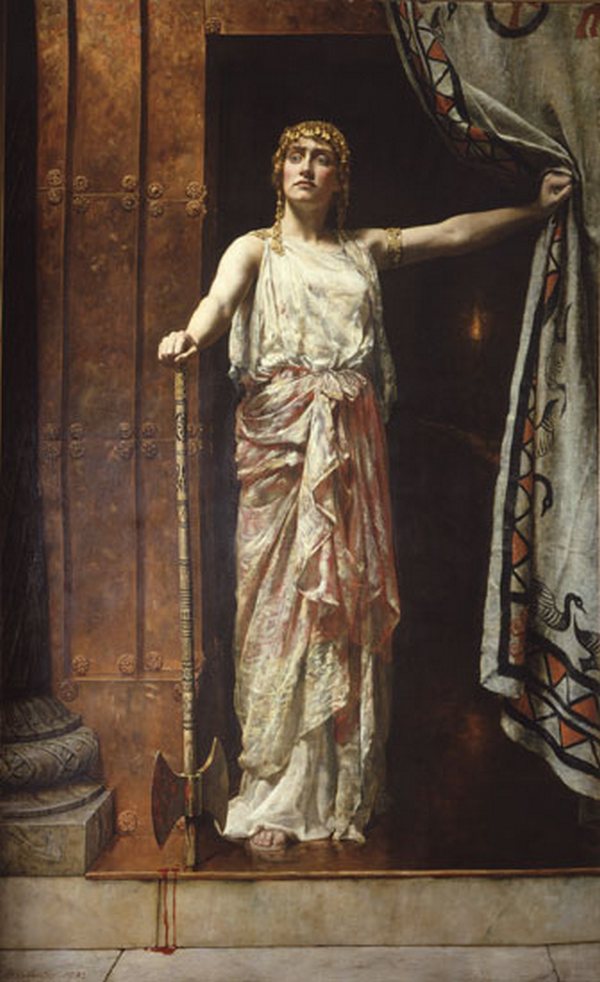
In his first major work, Tolstoy introduced us to the setting of a besieged Russia. Delicately weaving the grand historical events of the Napoleonic invasions with the intimate lives of the elite. However masterfully crafted, Tolstoy struggled balancing these two components, leading to a second half bogged down by dialectics, theoretics, and decline in the literary realist aspects of the first half of the work. As you delve deeper into War and Peace, Tolstoy subordinates realist representation to philosophical and metaphysical inquiry. His second work, Anna Karenina, proceeds in a contrary direction. A radical, regarded commitment to the interior, intimate lives of four elites that vividly brings to the forefront the decay of tradition, societal norms, and failure of modernity.
Building upon themes, motifs, and aesthetic concerns inherited from classical, medieval, and early modern literature, Anna Karenina occupies a distinctive position in the literary tradition. In classical thought, women are frequently associated with agapic love, moral insight, and the unity of beauty and truth, while men are aligned with erotic love, understood as the restless pursuit or quest for wisdom. The inversion of this paradigm constitutes a central conflict in several classical tragedies, most notably in the figure of Clytemnestra, whose lust for power and revenge leads her into an adulterous alliance with the troubled Aegisthus in The Oresteia of Aeschylus.
Literature of the medieval era saw a substantial shift in both moral virtues, as well as both the conception and regulation of desire. This reorientation finds one of its clearest expressions in the twelfth century work, Tristan and Isolde. Their love, defiant of social and moral order, implicitly declares the world itself to be irrelevant in the face of absolute passion.The two worship themselves through the exaltation of the other, transforming desire into a quasi-sacred force. This elevation of passion constitutes the sacralization of the profane, a movement that ultimately culminates in death – the final and inevitable end of their love.
In the titular character of Anna Karenina, we see aspects of both Clytemnestra and Isolde. From The Oresteia, she inherits the severe transgression of the social order, moral expectations, and marriage. In hypermodernity, this is a daily occurrence, but Anna lives in a traditional society that while in a state of decay still upholds the tapestry of a moral order. From Isolde, Anna inherits the logic of passion: a love that renders the world expendable, and demands total fidelity to the beloved, even at the cost of exile, shame and death. Thus, Anna Karenina embodies the modern interiorization of the Tristan myth: a passion that demands totality, rejects the world, and discovers in death its only conceivable resolution. The famous anti-climax of the work, Anna’s suicide is not simply the trite, even conventional result of social pressure or climate of opinion. It is structurally prepared by the internal logic of passion itself. Tolstoy continues in the western literary tradition of eros, well-established by Tristan. Vronsky and Anna’s love is intensified by its obstacles, sustained by prohibition, and threatened by fulfillment.
“Tristan and Isolde do not love one another. They say they don’t, and everything goes to prove it. What they love is the love of being in love. They behave as if aware that whatever obstructs love must ensure and consolidate it in the heart of each and intensify it infinitely in the moment they reach the absolute obstacle, which is death. Tristan loves the awareness that he is loving far more than he loves Isolde. And Isolde does nothing to hold Tristan. All she needs is her passionate dream. Their need of one another is in order to be aflame, and they do not need one another as they are. What they need is not another’s presence, but one another’s absence. Thus, the partings of the lovers are dictated by their passion itself, and by the love they bestow on their passion rather than on its satisfaction or on its living object. That is why the Romance abounds in obstructions, why when mutually encouraging their joint dream in which each remains solitary they show such astounding indifference, and why events work up in a romantic climax to a fatal apotheosis.”
Love in the Western World, Chpt. 8, pp. 41 – 42
Denis de Rougemont (1940)
Anna Arkadyevna and Vronsky’s relationship unfolds according to the Rougemontian structure of eros, in which passion feeds upon restriction and finds its terminus in annihilation. Anna’s death is in fact, the only escape from the contradiction she finds herself embedded within. That contradiction being Rougemont’s paradox. Passion must sabotage its own stated aim in order to persist. Tolstoy perfectly contrasts this with the characters Katarina Scherbatsky and Constantine Levin, whose story not only parallels that of Anna and company structurally, but also thematically, and metaphysically. Levin is the counter-model to the Rougemontian thesis. Whereas Anna’s interiority collapses inward, through the effects of isolation, jealousy, and continual despair, Levin’s opens outward. While this is primarily through the participation in life-affirming activities, e.g. labor, civic duty, and study, it is chiefly through the metaphysically transforming power of gratitude. The result of a totally opposing teloi of love. Two irreconcilable visions of eros, one oriented toward rupture, and death, the other toward continuity, participation, and life.
 colemorganwrites